Available Configurations and Project Options
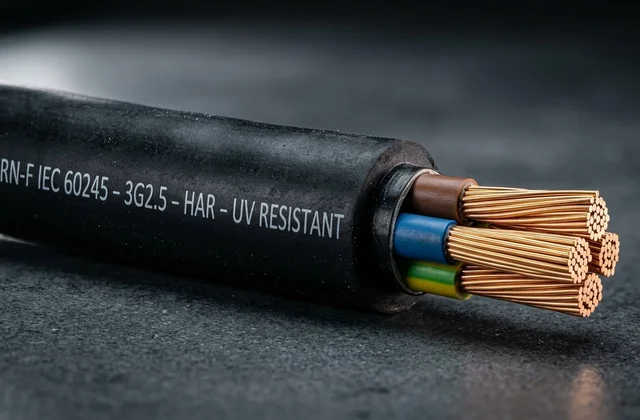
Conductor cross-section, core count, voltage class, insulation and sheath compounds, diameter constraints, length, identification, marking and packing can be reviewed against the installation environment. DEV CABLE can review non-standard equipment, replacement cable and OEM requirements before quotation.
Confirm voltage, conductor size, cores, installation method, mobility, oil and water exposure, temperature and mechanical stress together. Rubber cables do not all have the same performance. For material selection context, see the EPR, EPDM and HEPR insulation guide.
Applications
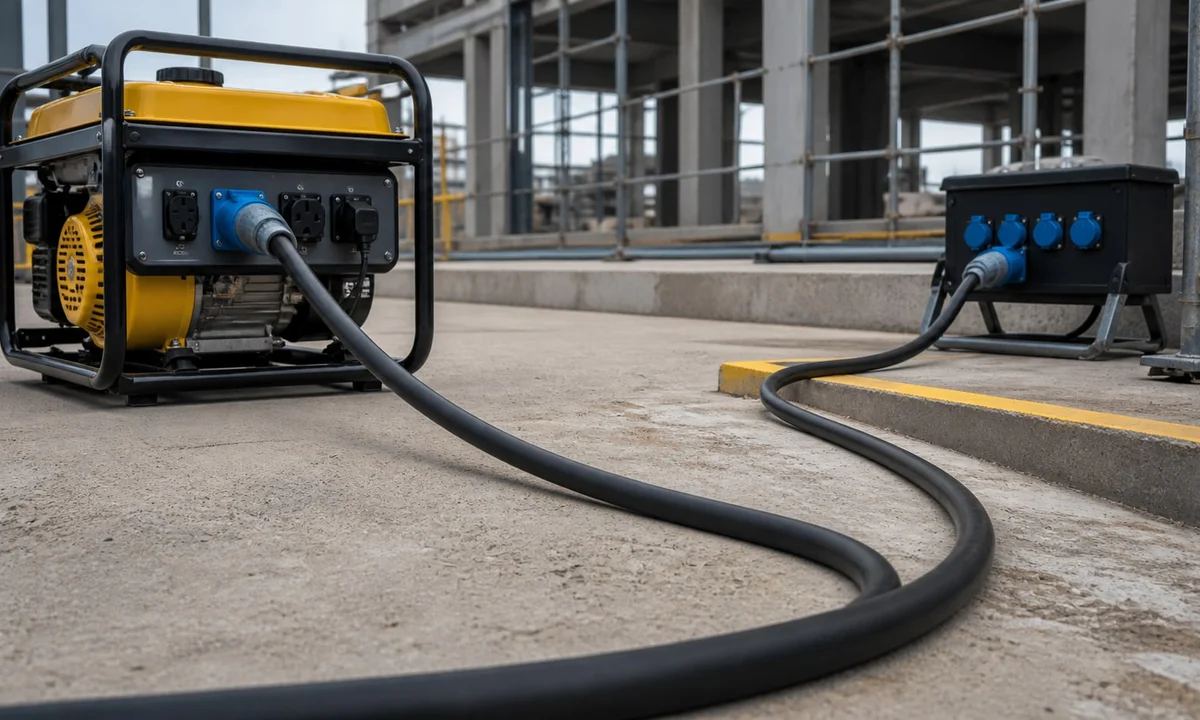
- Generators and temporary power: connections to generators, motors, pumps and temporary distribution, with load and handling requirements confirmed.
- Construction sites: portable equipment and temporary supplies; select the construction for site handling and exposure.
- Workshops and industrial machinery: equipment connections where vibration, occasional movement and repeated handling need assessment.
- Mobile and port equipment: material handling, maintenance and replacement projects; define the actual movement and mechanical load before selection.
H07RN-F vs Standard PVC Cable
| Factor | H07RN-F / rubber cable | Typical PVC cable |
|---|---|---|
| Flexibility and mobile use | Common reference for portable equipment; movement duty still needs confirmation | Flexibility depends on conductor and compound; not every type suits moving equipment |
| Mechanical handling | Considered for demanding handling within its specified limits | Many fixed-installation types are intended for less frequent handling |
| Outdoor use | Check weather, UV, water and temperature limits for the construction | Check the same exposures against the PVC compound and design |
| Fixed installation | Only where the specification and installation rules permit | Many types are designed for fixed installation |
| Cost | Compare the quotation for the required construction | May be more economical where a standard construction meets the duty |
| Selection | Match electrical, environmental and mechanical conditions | Apply the same checks; jacket material alone is insufficient |
The correct choice depends on installation conditions, not jacket material alone. No rubber or PVC family is universally the better option.
Projects may also require fixed control or signal connections alongside flexible equipment leads. Compare other industrial cables by application.
Flexible Cable vs Reeling Cable
Occasional movement, portable equipment handling, repeated flexing, continuous reeling, festoon travel, torsion and drag-chain use impose different mechanical conditions. A flexible cable is not automatically a high-cycle dynamic cable; standard H07RN-F does not establish continuous reeling suitability.
For continuous movement, provide travel distance, bending radius, cycles, speed, reel diameter, tension and torsion requirements. Confirm conductor, lay-up, sheath and mechanical limits against the proposed cable datasheet.
Information Required for Quotation
- Cable type or reference standard, if known
- Rated voltage and load current or equipment power
- Number of cores and earth conductor arrangement
- Conductor cross-section
- Required cable length
- Installation environment and method
- Fixed or moving application
- Oil, water and chemical exposure, including UV/weather
- Required temperature range
- Reeling, festoon, drag-chain or torsion requirements, if any
- Required marking, certification and documents
- Destination country
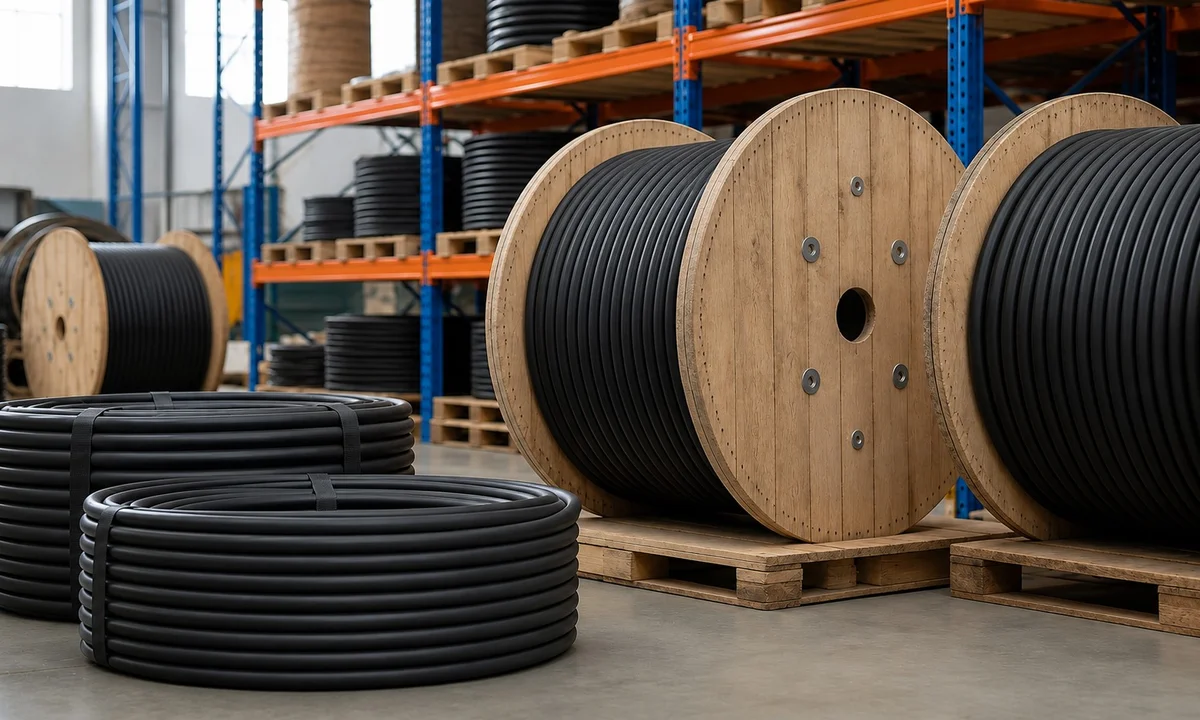
Also specify quantity, coil/reel packing, bare cable or connector assembly, and gland requirements. If the type is unknown, send an existing cable marking, datasheet, drawing or application description for technical review.
Size selection considers current, length, allowable voltage drop, ambient temperature, grouping and installation method. Check bending radius and pulling/tensile loads against the final datasheet, especially for larger sections and mobile equipment.
Quality and Documentation
Every finished cable length undergoes 100% continuity testing before shipment. Additional tests must be specified and agreed. Depending on the ordered specification, documentation may include technical datasheets, construction details, inspection records and other agreed evidence.
H07RN-F, IEC 60245, EN 50525-2-21 and conductor requirements such as IEC 60228 are project references, not automatic certification claims. Confirm final rating, marking and any approval evidence for the ordered construction before production.
The H07RN-F name alone does not guarantee permanent immersion, continuous reeling, universal oil or chemical resistance, every temperature condition, national approval or industrial environment. For immersed pump service, review submersible pump cable requirements and confirm water type, depth, temperature and exposure duration.
Illustrative images only. Visible markings do not confirm certification or performance of the ordered cable; scenes do not establish DEV CABLE stock or completed projects.
Frequently Asked Questions
What is H07RN-F cable used for?
It is a common reference for generator, construction, workshop and mobile equipment power connections. Select the exact construction for load, installation and movement.
Is H07RN-F cable waterproof?
Water resistance depends on construction, installation and exposure duration. The designation alone does not establish permanent submersion suitability; confirm water type, depth and temperature.
Can H07RN-F cable be used outdoors?
Check the specific cable’s weather, UV, water and temperature limits. An outdoor application must be matched to the confirmed construction.
Is H07RN-F suitable for cable reels?
Handling flexibility does not guarantee continuous reeling suitability. Specify the reel, travel, speed, cycles, bending radius, tension and torsion for review.
What is the difference between rubber cable and PVC cable?
Rubber constructions are often considered for portable or demanding handling, while many PVC types serve fixed installations. Compare the actual construction and mechanical duty.
Can you supply custom rubber cables?
Project-specific core configurations, conductor sizes and constructions can be reviewed for the application before quotation. Confirm the proposed specification before ordering.