A configurable tether platform for underwater systems
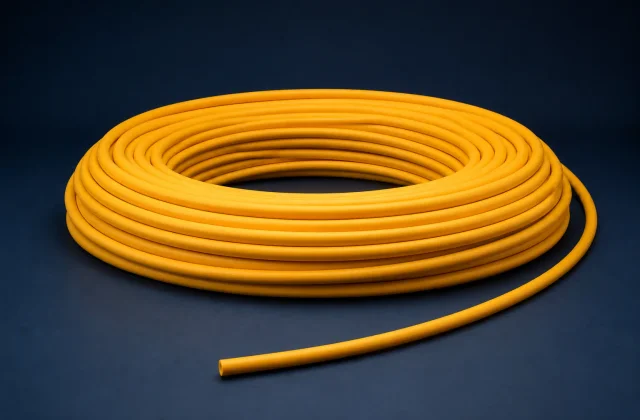
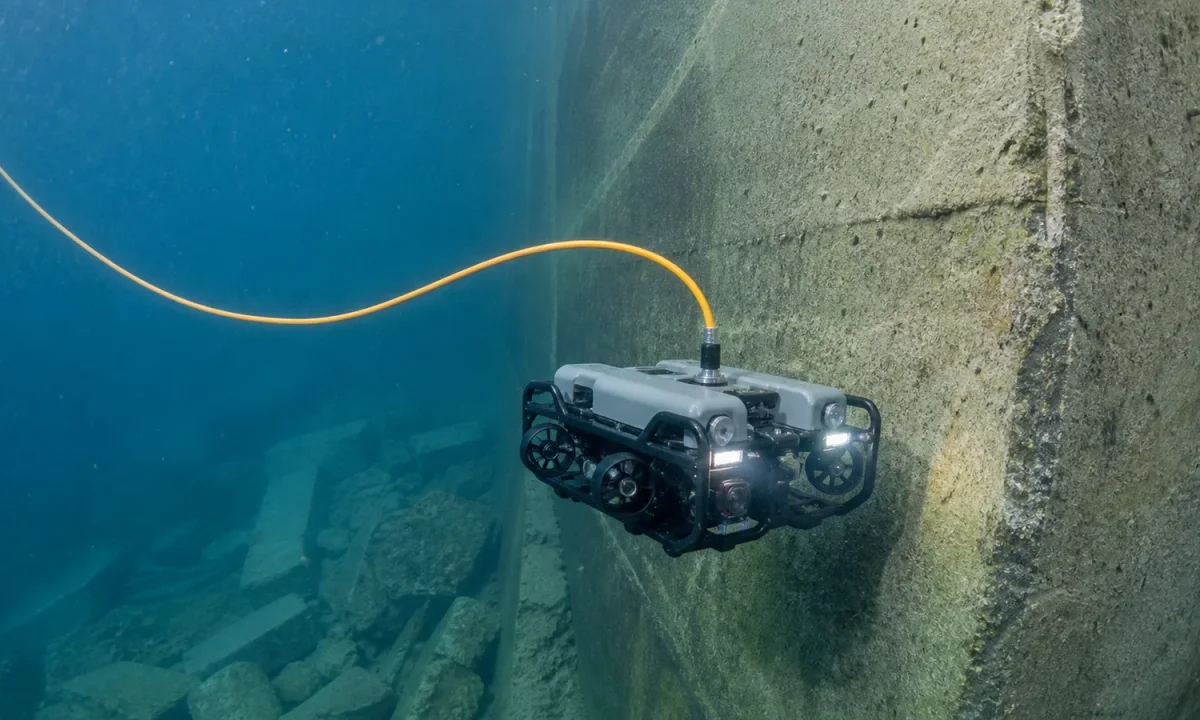
DEV CABLE designs and manufactures custom neutrally buoyant ROV tether cables for underwater robots, inspection ROVs, cameras, sonar systems and subsea sensors. The tether can be developed around power delivery, control signals, copper data pairs, Ethernet, fiber optics, mechanical strength and a defined buoyancy target rather than forcing the project into one fixed cable specification.
The cable design has to balance electrical performance with diameter, flexibility, tensile load, water resistance, termination method and behavior in the water. This page therefore presents a configurable ROV tether platform. Final construction and ratings are confirmed only after the vehicle, deployment method and operating conditions have been reviewed.
Four common ROV tether configurations
Signal and control tether
A compact signal tether may use one to four twisted pairs for control, RS-232, RS-485, CAN bus, sensor communication, analog video or other verified protocols. Pair lay, shielding and conductor size are selected from the signal type, distance, flexing and interference environment.
Ethernet tether
Two- or four-pair designs can support camera transmission, telemetry and underwater robot networking. An Ethernet category is not assumed: Cat5e, Cat6 or another performance designation must be confirmed against the completed construction and required link length.
Power and signal hybrid tether
A hybrid tether can place power conductors, signal pairs, communication pairs, optional shields, water-blocking materials and a mechanical strength member in one cable. This approach is useful when a compact ROV needs a single tether for topside power and vehicle control.
Fiber optic hybrid tether
Single-mode or multimode fiber can be integrated with copper conductors for HD video, sonar, high-bandwidth telemetry or longer communication links. Fiber count, protection, bend management and termination are part of the engineering review.
Buoyancy is defined by the application
Neutral buoyancy is not a universal condition that can be specified independently of the cable and water. Buoyancy can be engineered according to cable construction, operating water conditions and application requirements. Freshwater and seawater have different densities, while copper content, strength members, fillers, jacket construction, terminations and manufacturing tolerances also affect the result.
Available design targets can include neutral buoyancy in freshwater, neutral buoyancy in seawater, slightly positive buoyancy or a customer-specified target. The RFQ should state the water type, expected operating conditions, full tether length and how the tether will be deployed or managed.
Engineered ROV tether construction
ROV tether construction must balance electrical performance, tensile strength, cable diameter, flexibility, hydrodynamic drag and buoyancy. A project-specific arrangement may include:
- Foamed PUR or another engineered polyurethane outer jacket
- Aramid or other high-strength yarn for the mechanical load path
- Water-blocking yarn, fiber or engineered filling
- Twisted signal or data pairs
- Power conductors when required
- A protected single-mode or multimode fiber unit when required
- A central strength member where the load and internal geometry call for it
The exact layer sequence is not fixed. DEV CABLE reviews the ROV power system, communication protocol, operating depth, tether length, preferred diameter, tensile requirement and termination method before producing the final drawing and specification.
DEV-NB4P-26 reference configuration
The following example gives buyers a concrete starting point. It is a design reference rather than a released fixed SKU, and no unlisted electrical, mechanical or depth rating should be inferred.
| Parameter | Reference configuration |
|---|---|
| Cable type | Neutrally buoyant ROV tether |
| Communication | 4 twisted pairs |
| Conductor | Stranded tinned copper |
| Conductor size | 26 AWG |
| Insulation | PE or engineered insulation |
| Strength member | Aramid / high-strength yarn |
| Water blocking | Water-blocking yarn, fiber or engineered filling |
| Outer jacket | Foamed PUR / engineered polyurethane |
| Jacket color | Yellow / orange / custom |
| Buoyancy | Neutral / slightly positive / custom |
| Length and OD | Custom / subject to confirmed design |
| Application | ROV / underwater robot / inspection system |
Key ROV tether design parameters
- Controlled buoyancy: confirm freshwater or seawater and whether neutral, slightly positive or another target is required.
- Low diameter and low drag: optimize OD without compromising conductors, insulation, fiber protection or mechanical load.
- Tensile strength: define working and required breaking loads so the strength member can be sized independently of the conductors.
- Water resistance: select water-blocking and jacket construction from exposure, pressure, cable ends and connector arrangement.
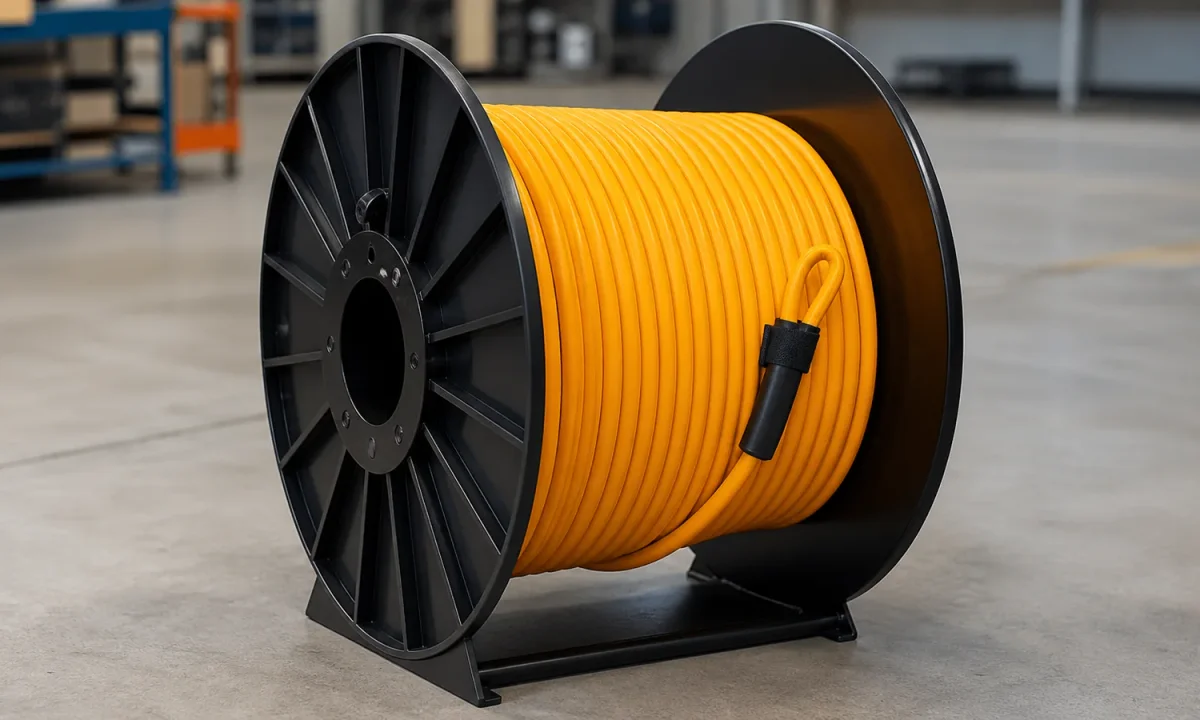
- Flexible construction: review conductor stranding, jacket material, deployment, recovery, reel and tether-management conditions.
- Hybrid transmission: identify power, signal, Ethernet and fiber functions, including separation and shielding needs.
Applications
Typical project discussions include inspection ROVs, underwater robots, underwater cameras, sonar systems, aquaculture inspection, dam and reservoir inspection, offshore inspection, marine research, subsea sensors and underwater monitoring systems. Suitability for any specific site depends on the confirmed construction and operating limits.
How to specify your ROV tether cable
You do not need to design the cable layers before contacting us. Send the system requirements and DEV CABLE can prepare a construction for review. A technically complete RFQ should include:
- ROV or underwater equipment application
- Operating depth and deployment method
- Freshwater or seawater
- Required tether length
- Power voltage and maximum current
- Signal type or communication protocol
- Ethernet requirement and link details
- Single-mode or multimode fiber requirement
- Number and size of conductors
- Maximum preferred cable OD
- Required working and breaking strength
- Neutral, slightly positive or other buoyancy target
- Connector, penetrator or unterminated-end requirement
- Order quantity, destination and required documents
FAQ
What is a neutrally buoyant ROV tether cable?
It is an underwater tether whose effective buoyancy is engineered to reduce the vertical force that the cable applies to the vehicle. The target must be linked to water type, cable construction and operating conditions.
What is the difference between neutral and positive buoyancy?
Neutral buoyancy aims to minimize net sinking or rising force. A slightly positive tether tends upward. The appropriate behavior depends on the ROV, obstacles, current and tether-management method.
Can one ROV tether carry both power and data?
Yes. A custom hybrid construction can integrate power conductors, signal pairs, qualified Ethernet elements and/or fiber optics. The final combination determines diameter, buoyancy, flexibility and mechanical design.
Can the cable diameter be customized?
Yes, within the constraints created by conductor size, insulation, shielding, fiber protection, tensile strength and buoyancy. A maximum preferred OD is a useful RFQ input, not a guaranteed value before design review.
Can the tether be designed for seawater?
Yes. State whether the target is for freshwater or seawater because water density changes the buoyancy result. Jacket, water blocking, terminations and other environmental requirements must also be confirmed.
Can DEV CABLE develop a fiber optic ROV tether?
Fiber-only and copper-fiber hybrid constructions can be reviewed for single-mode or multimode requirements. Fiber count, protection, termination, link needs and mechanical conditions are confirmed for the project.
Every finished cable or cord length undergoes 100% continuity testing before shipment.
Engineering note
Final electrical, mechanical, buoyancy and depth ratings depend on the confirmed cable construction and application conditions. All critical parameters should be verified during engineering review before production. No IP rating, Ethernet category, certification, depth, breaking strength, voltage, bend radius or flex-life value is implied unless it appears in the approved project specification.