MVVS Cable Overview
MVVS cable is a shielded signal-cable family associated with microphone wiring, equipment signal lines and general instrumentation. Its purpose is to carry the specified signal with a shield intended to reduce external interference. Circuit compatibility depends on the chosen construction and how the cable is installed and terminated.
DEV CABLE reviews MVVS enquiries against the buyer’s specification. The family descriptions below explain selection considerations; they are not a released DEV CABLE size program or a guarantee of ratings, materials or approvals for every configuration. The quotation must identify the construction and documents agreed for the order.
Typical Construction
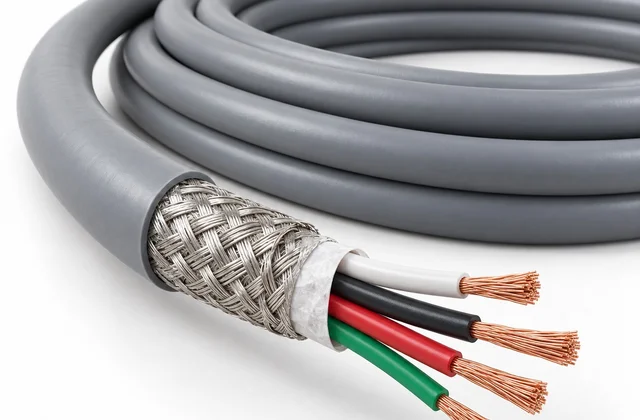
Established MVVS references commonly describe copper conductors with PVC insulation and a PVC sheath. Shield designs vary, including braid and spiral forms in manufacturer-specific configurations. Confirm the required layers rather than selecting by the designation alone.
Specify conductor size, material and strand construction; insulation compound, thickness and core identification; core count, pairs, lay-up and any filler or binder; shield form, material, coverage requirement and termination; and sheath material, color, thickness and finished diameter. The reference construction below does not assume a universal braid or copper-tape screen.
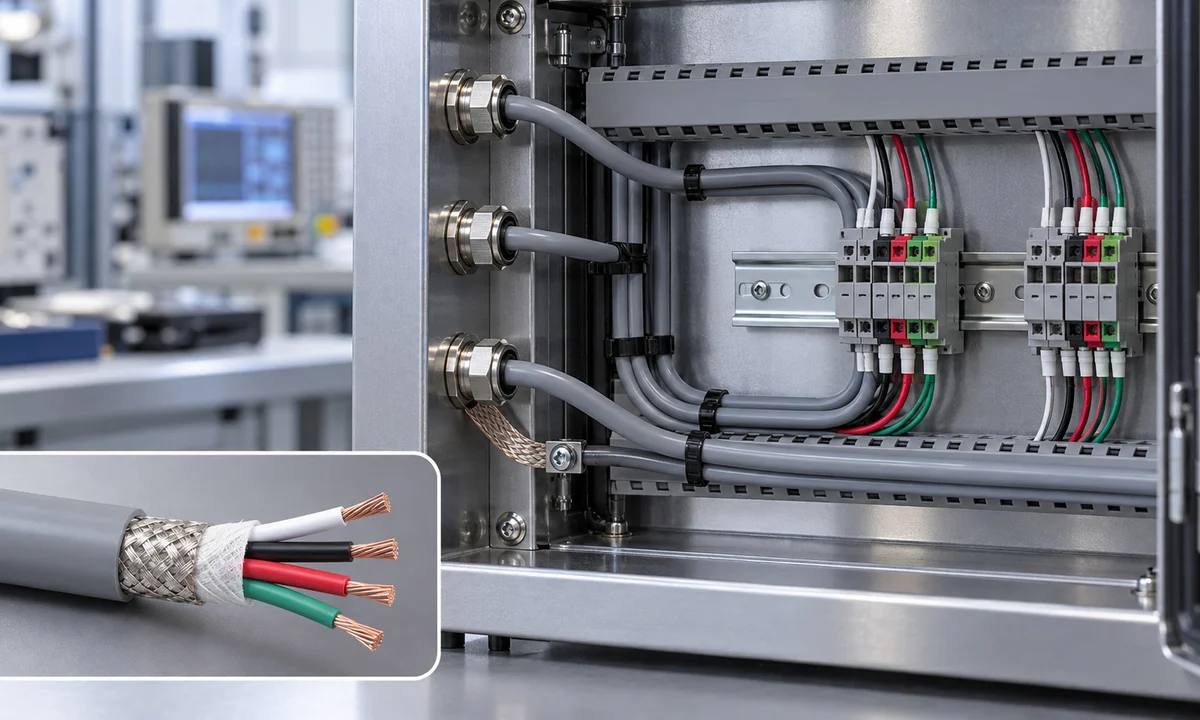
A shield is part of an interference-control design, not a guarantee of noise-free operation. State the equipment bonding and termination method; braid appearance alone does not establish coverage or system EMC performance.
Reference Specifications
These typical MVVS configurations provide a starting point for a quotation. Materials, construction and suitability are agreed for the requested cable.
| Item | Reference Specification |
|---|---|
| Conductor | Stranded copper conductor |
| Insulation | PVC |
| Shield | Copper wire shield; shield form confirmed for the configuration |
| Outer sheath | PVC |
| Nominal conductor sizes | 0.18–2.00 mm²; individual sizes listed below |
| Core configuration | Multi-core; core count selected with conductor size |
| Installation | Primarily fixed signal wiring; installation conditions to be confirmed |
| Custom construction | Project-specific construction reviewed for manufacturing feasibility |
Available Sizes
The following reference sizes and typical core ranges help define an MVVS enquiry. Individual combinations are confirmed during quotation.
| Nominal conductor size | Reference core counts | Approx. overall diameter range |
|---|---|---|
| 0.18 mm² | 2–30 cores | 3.3–10.2 mm* |
| 0.25 mm² | 2–20 cores | 4.5–9.9 mm* |
| 0.30 mm² | 2–30 cores | 5.2–12.5 mm |
| 0.50 mm² | 2–30 cores | 5.8–16.0 mm |
| 0.75 mm² | 2–20 cores | 6.2–15.0 mm |
| 1.25 mm² | 2–12 cores | 7.4–14.3 mm |
| 2.00 mm² | 2–12 cores | 8.0–15.5 mm |
* The 0.18 mm² and 0.25 mm² ranges currently have a single published source; verify the diameter for the required construction.
Available core counts and construction details depend on conductor size, shield design and project requirements. Final dimensions and electrical ratings are confirmed against the quotation specification.
Specify conductor size and core count, the required shield construction and the installation environment. Include voltage, temperature and standard requirements in the RFQ; final outside diameter and other engineering values are confirmed during quotation.
MVVS Cable Applications
Potential enquiries include:
- Microphone and audio signal wiring where the circuit requirements match the selected cable.
- Equipment signal connections with specified conductor and shield arrangements.
- Instrumentation and measurement signals requiring a reviewed wiring configuration.
- Fixed signal interconnections in electronic or industrial equipment.
The MVVS name does not establish power-circuit, hazardous-area, high-temperature or oil/chemical suitability. Flexible handling does not establish continuous-flex or drag-chain life. Describe these conditions in the RFQ so that the appropriate construction can be reviewed.
MVVS Selection Considerations
Start with the signal interface and installation, then define the conductor and shield. For replacement work, supply the existing marking, drawing or manufacturer datasheet and identify which requirements must be retained.
| Selection point | What to specify |
|---|---|
| Signal and core arrangement | Signal type, conductor size in mm² or AWG, core count and any required pairs. |
| Shield and termination | Shield form and material requirements, required coverage evidence, connectors and bonding method. |
| Routing and flexibility | Fixed routing, occasional handling or repeated movement; available space and bend constraints. |
| Environment | Ambient temperature, installation location, oil/chemical exposure and jacket requirements. |
| Ratings and documentation | Required voltage, standard/certification, tests, dimensional tolerances and acceptance documents. |
No voltage, temperature, bend radius or outside diameter should be inferred from another supplier’s MVVS model. Confirm those requirements for the proposed construction before procurement.
MVVS vs CVV-S
MVVS and CVV-S address different selection starting points. The comparison below describes product intent, not automatic interchangeability.
| Product | Selection emphasis |
|---|---|
| MVVS | A signal-oriented family associated with microphone, equipment and instrumentation wiring; confirm the selected configuration. |
| CVV-S | DEV CABLE’s existing copper-tape-screened industrial control product, focused on fixed plant and control-panel circuits. |
For that industrial control requirement, review the CVV-S shielded PVC control cable. Do not transfer its construction, ratings or standards to MVVS, or use one designation as evidence that the other is suitable.
Information Required for a Quotation
Send the following so the technical review can address the actual circuit and supply requirement:
- Conductor size and material/strand requirement.
- Number of cores and any required pair arrangement.
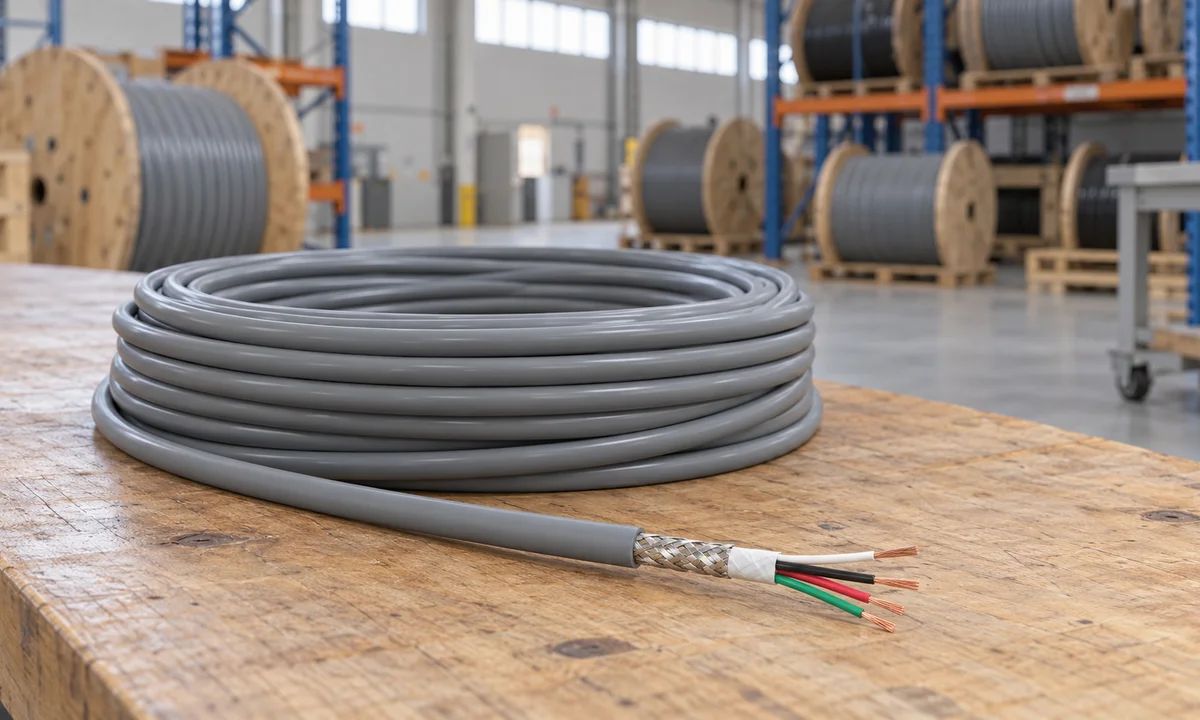
- Required finished length and length per reel or drum.
- Total quantity.
- Signal type and intended application.
- Shield construction and termination requirement.
- Installation location and routing.
- Flexibility or movement requirement.
- Jacket material, color and marking requirement.
- Required voltage.
- Operating temperature and relevant exposure conditions.
- Applicable standard/certification and required documents.
- Destination country.
- Drawing or existing cable specification, if available.
Every finished cable length undergoes 100% continuity testing before shipment. Any additional electrical, dimensional or acceptance tests must be defined separately in the agreed specification.
FAQ
What is MVVS cable used for?
The MVVS family is associated with microphone, equipment and instrumentation signal wiring. The circuit, environment and selected construction determine whether a particular cable is suitable.
What is the difference between MVVS and CVV-S?
MVVS starts from a signal-wiring requirement. The existing DEV CABLE CVV-S product starts from fixed industrial control wiring with a copper tape screen. Compare the confirmed specifications rather than assuming equivalent ratings or shielding.
Is MVVS suitable for signal and microphone wiring?
Those are established family applications, but the name does not guarantee compatibility with every audio interface, impedance requirement or movement condition. Specify the signal, termination and installation for review.
What information is needed to quote a custom MVVS cable?
Provide conductor and core requirements, signal duty, shielding, jacket, voltage, temperature, installation, length, quantity and destination. Include an existing drawing or datasheet for replacement work; construction and manufacturing feasibility are confirmed during review.